About Us
Our Vision
Our vision is to be the world’s most trusted gauge manufacturer for film extrusion
Our Mission
Our mission is to enable the global film extrusion industry to a high quality, resource-saving and reliable production

Your Contacts
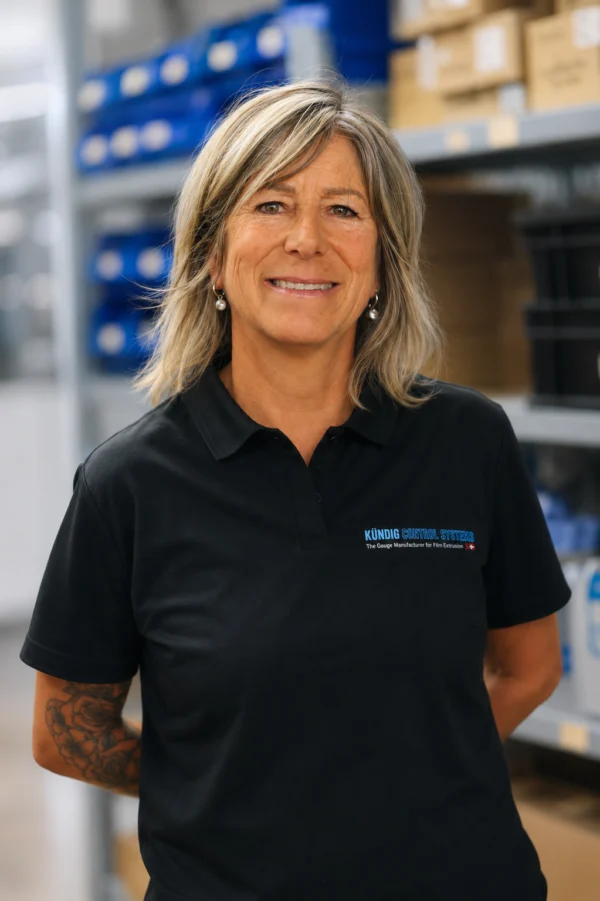
Order Processing & Vocational Training
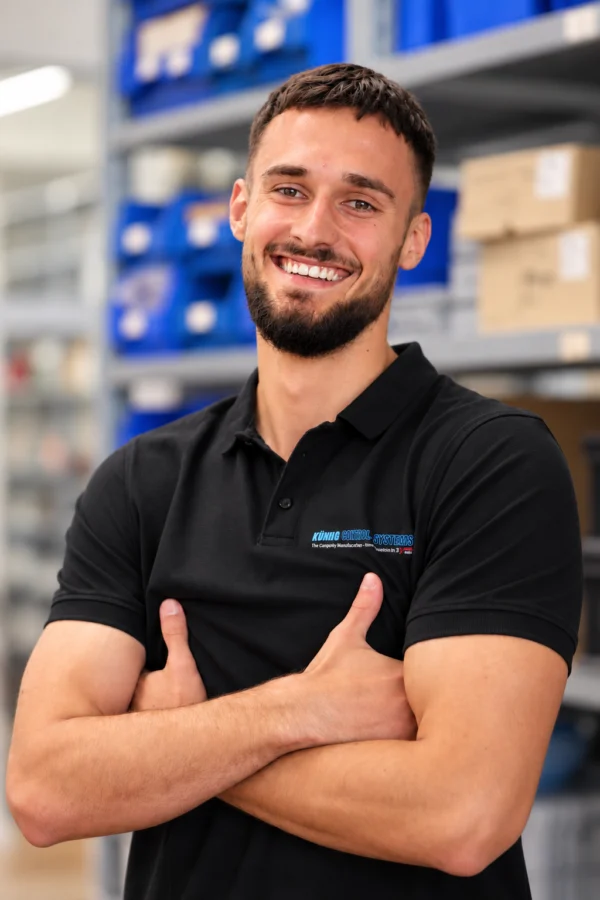
Service Engineer
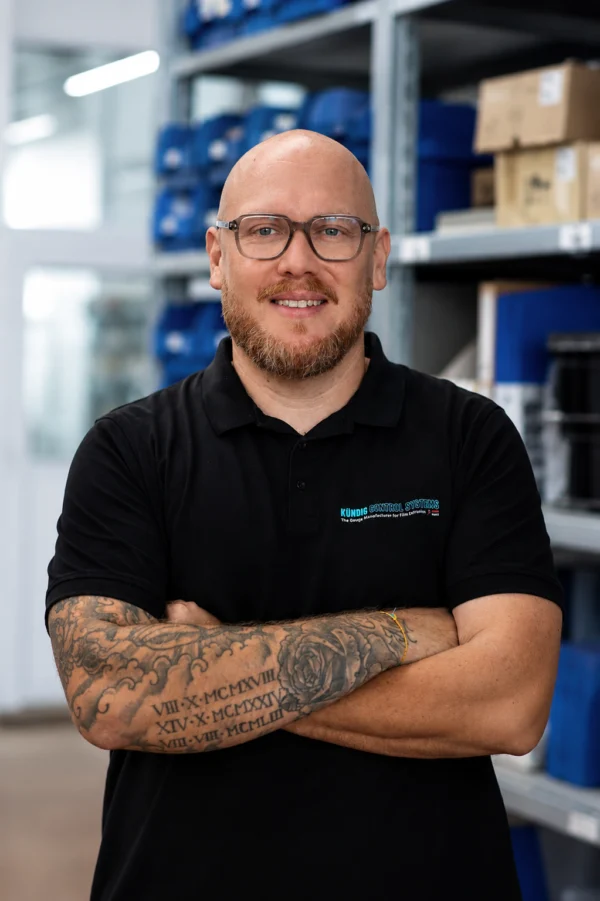
Head of Customer Service & ERP Consultant
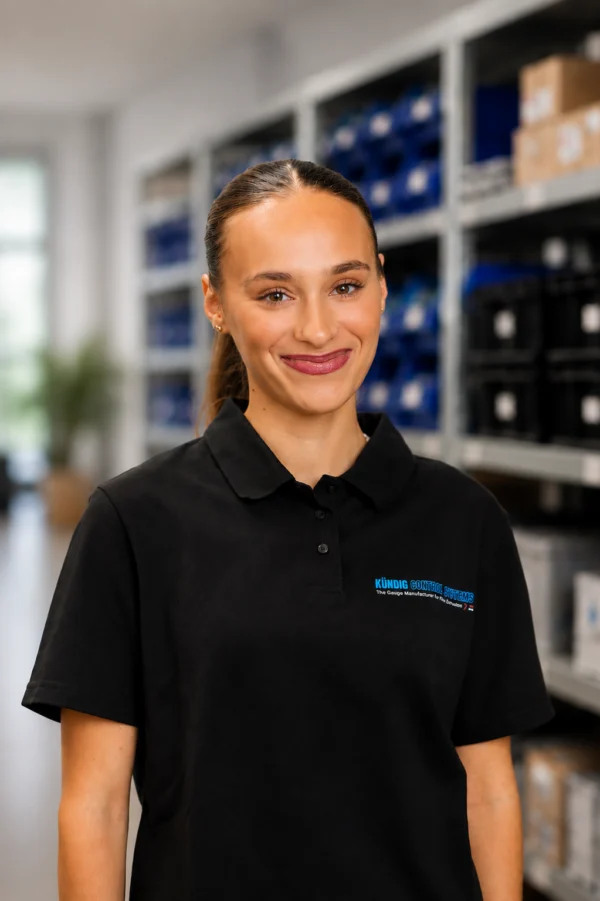
Order Processing | Apprentice
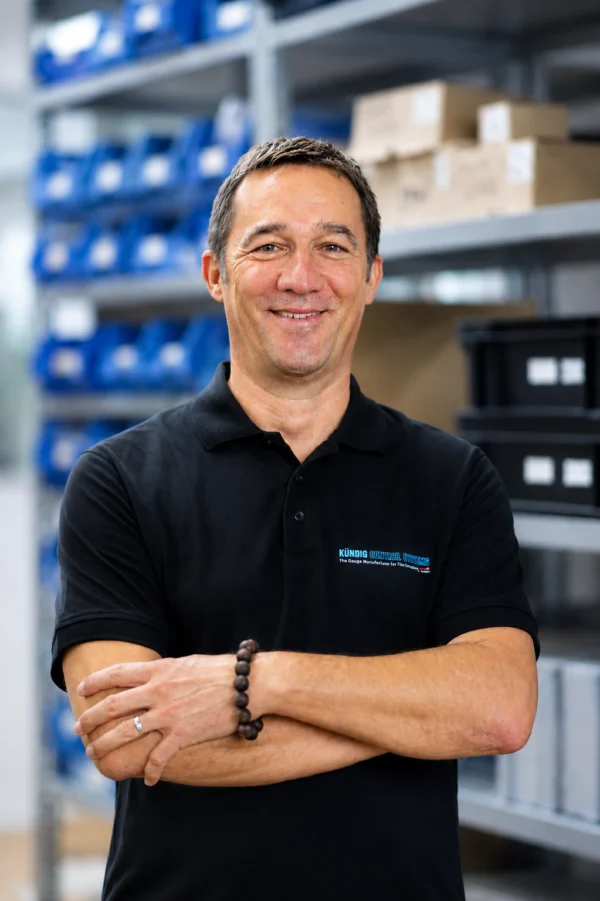
Head of Sales & Marketing
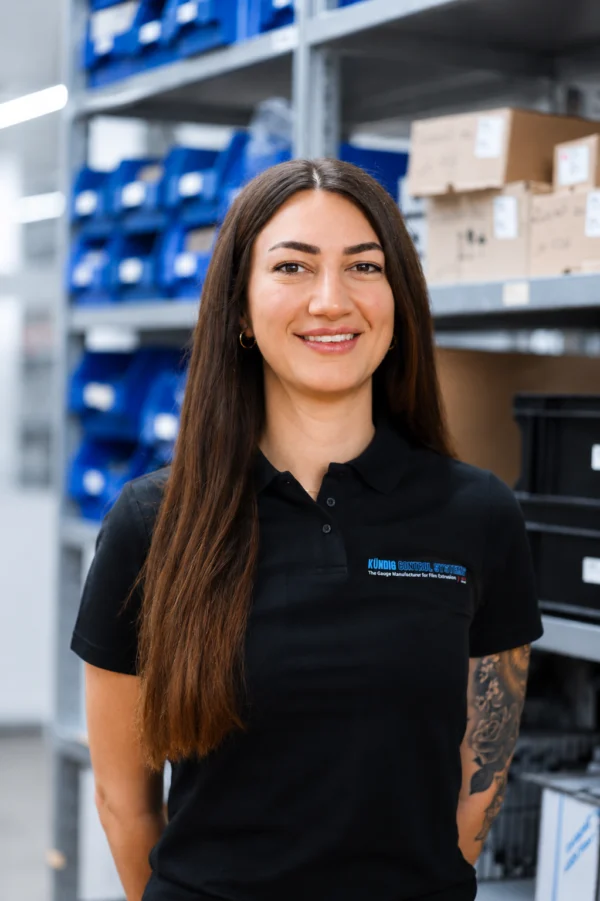
Head of Order Processing

Head of Research & Development
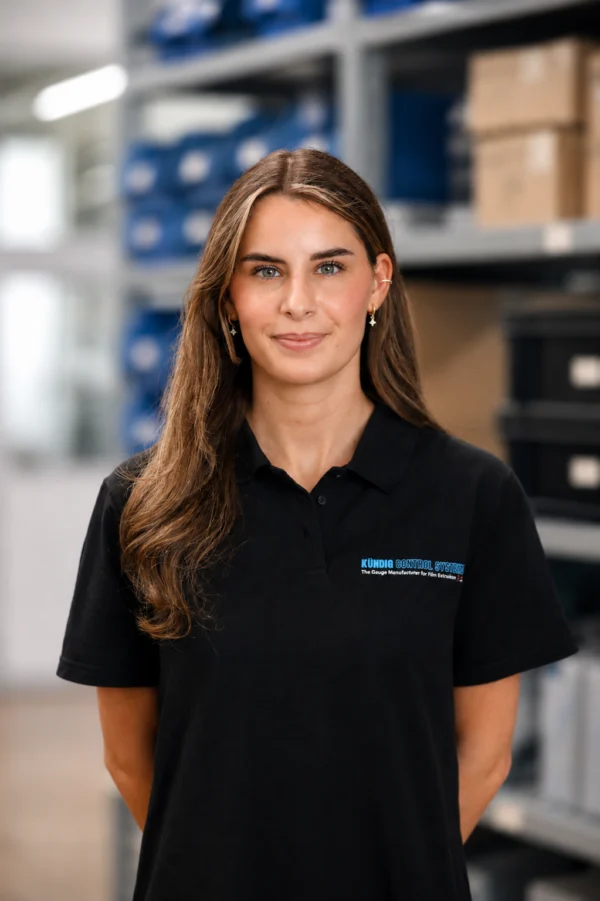
Administrative Customer Support
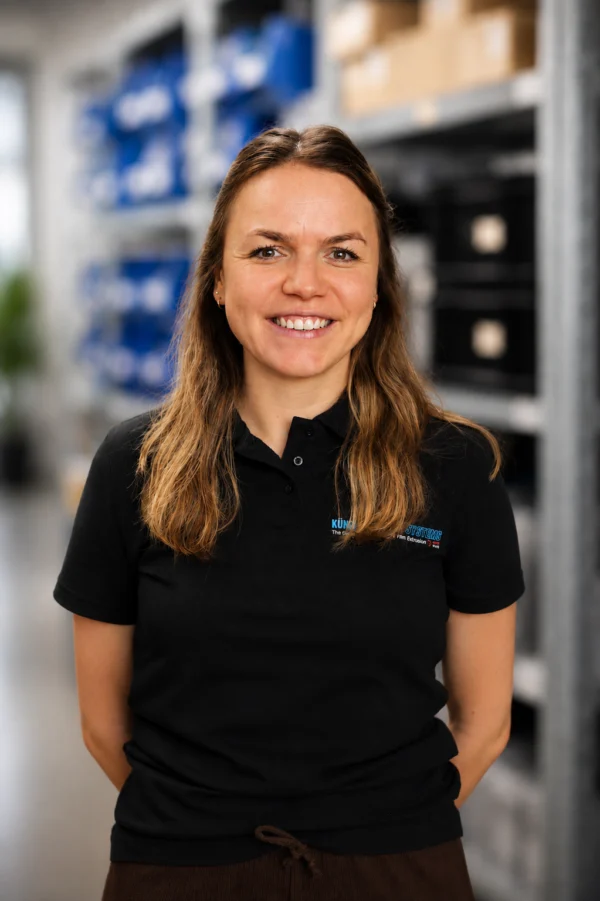
Human Resources | Finance
Human Resources | Finance
Order Processing
Order Processing | Apprentice
Order Processing
Service Engineer
Head of Production
Service Engineer

Service Engineer
General Manager
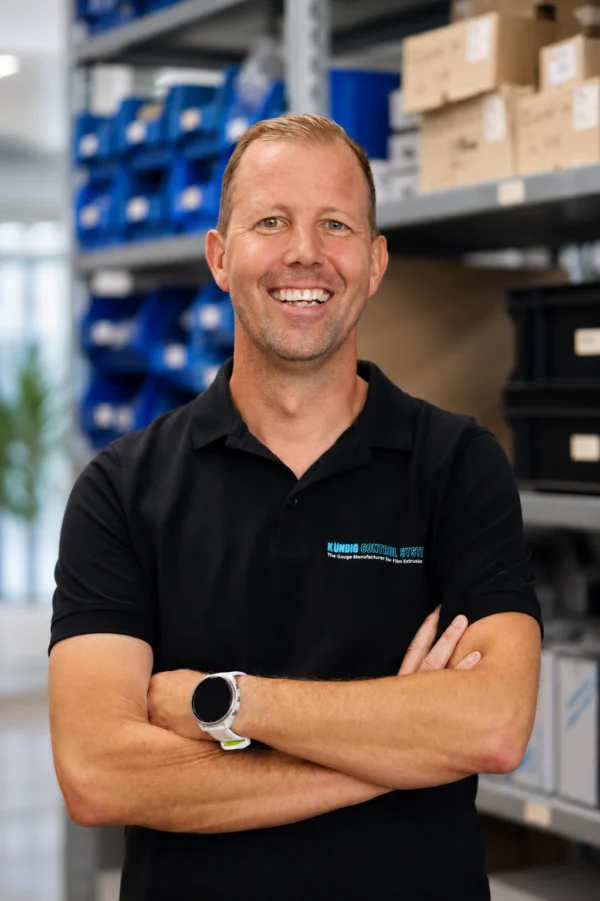
Head of Procurement
Flashback
1970 | In search of another business activity
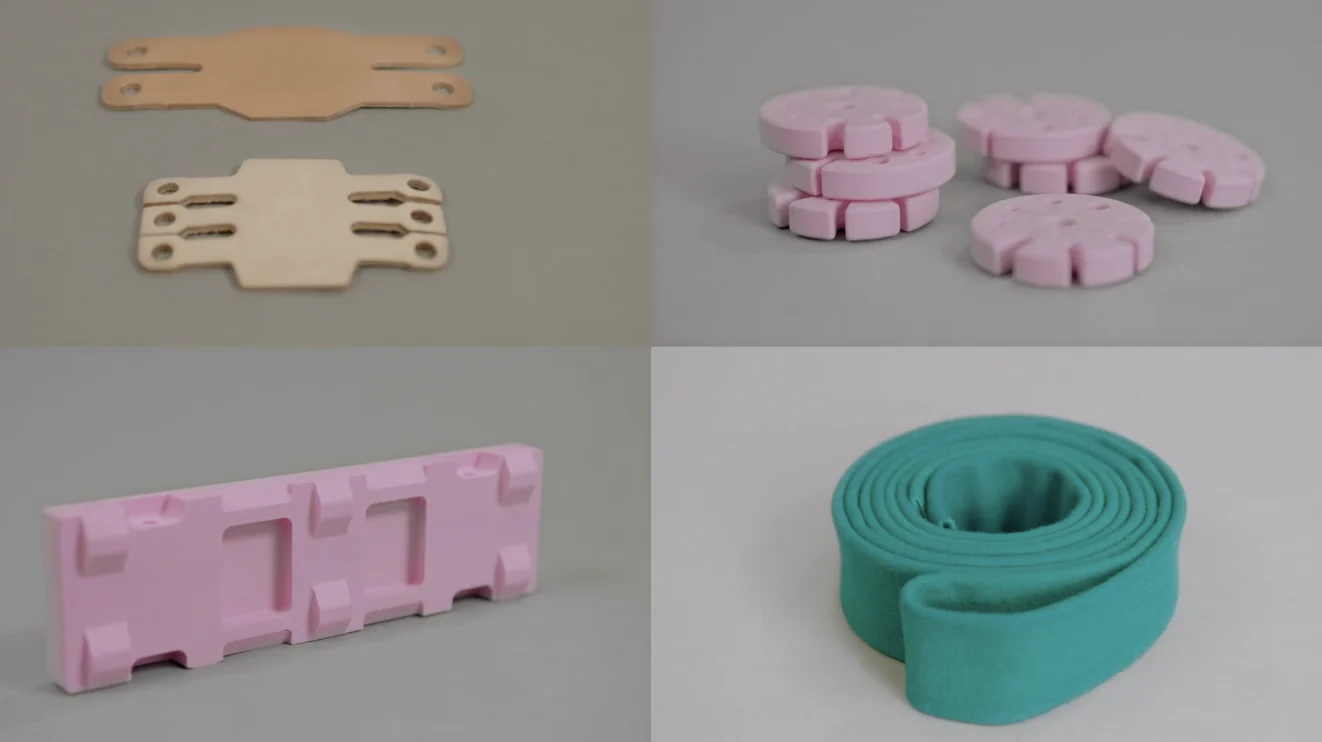
In early 1970, HCH. KÜNDIG & CIE. AG (HKC) hired a technical salesman—Albert Keller—and tasked him with establishing a new division for equipment and accessories outside of HKC’s core business at the time—accessories and machinery for the global textile industry.
1971 | Opportunity for a new business venture
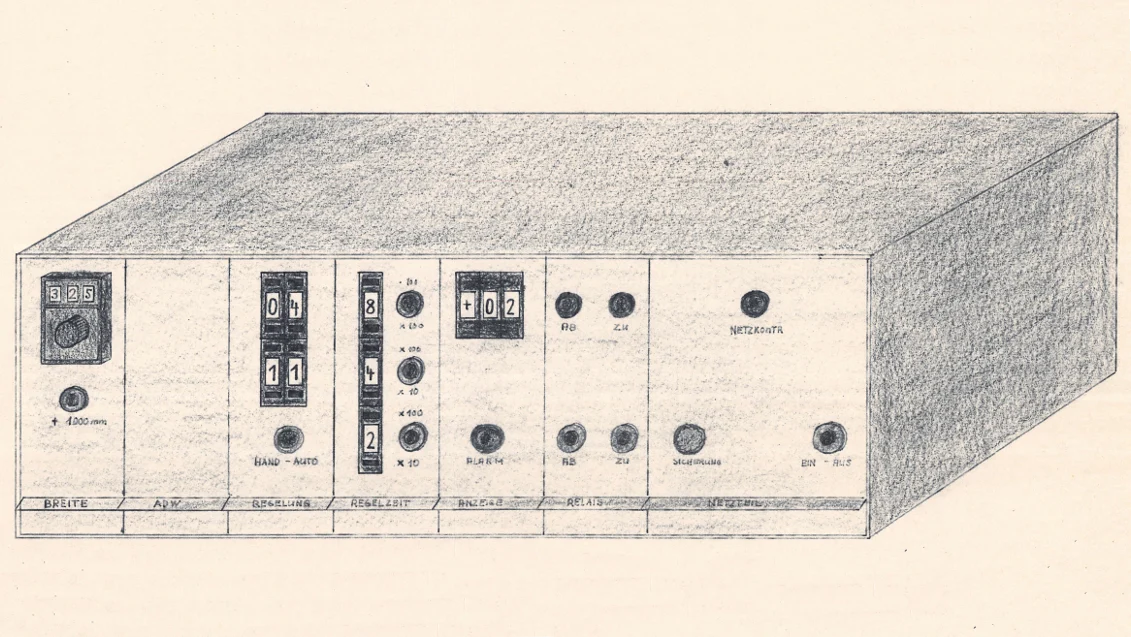
During a spontaneous visit to the former Vinora company in Rapperswil-Jona, Switzerland, an opportunity for a new business venture arose. Vinora needed a new width control device for blown film extrusion lines to replace the unsuitable devices then available from the Meiners company. HKC decided this was a challenge they would tackle with the assistance from a young electrical engineer—Erich Krummenacher.
1972 | First Width Control System
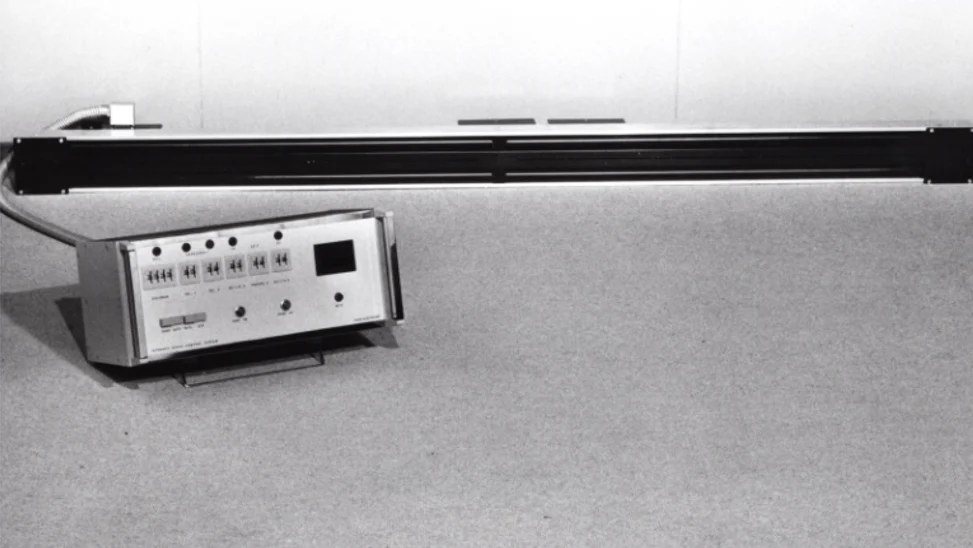
In 1972, HKC supplied Vinora with the first Width Control System, consisting of a control unit for operating two pneumatic valves and a Width Measuring Bar mounted after the take-off. This laid the foundation for the new division, KÜNDIG CONTROL SYSTEMS (KCS).
1975 | FE-4 Width Control
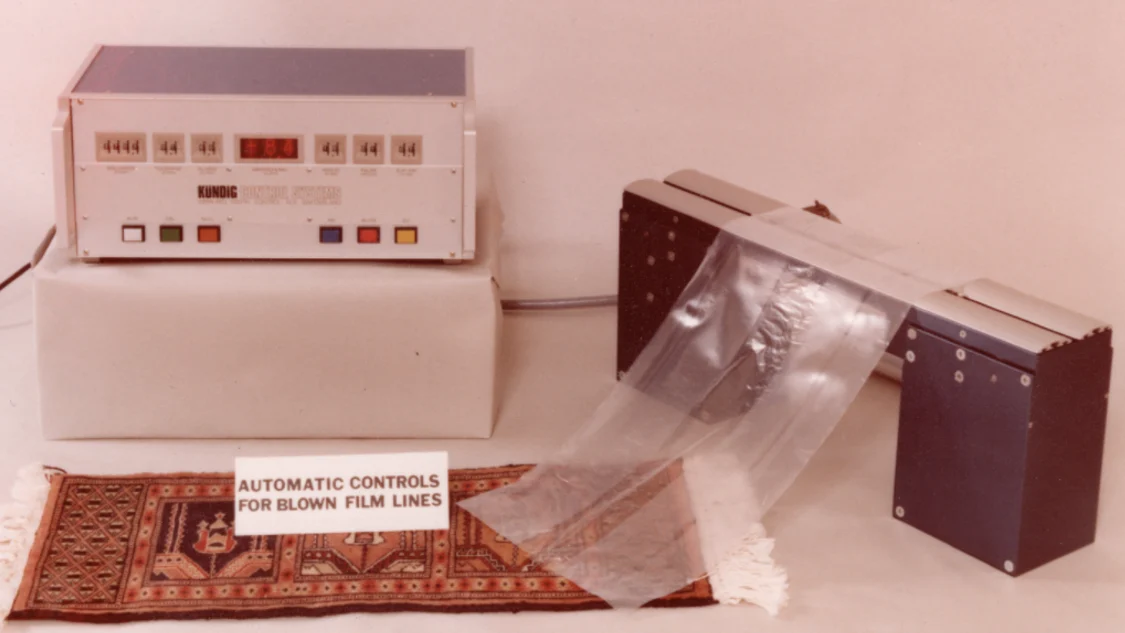
At the K Show 1975 in Düsseldorf, the FE-4 Width Control System was introduced to the market. The width deviation was displayed using three NIXI tubes (Numeric Indicator eXperiment no. I). Language selection was implemented using front panel attachments with different labels.
1979 | First Thickness Gauge
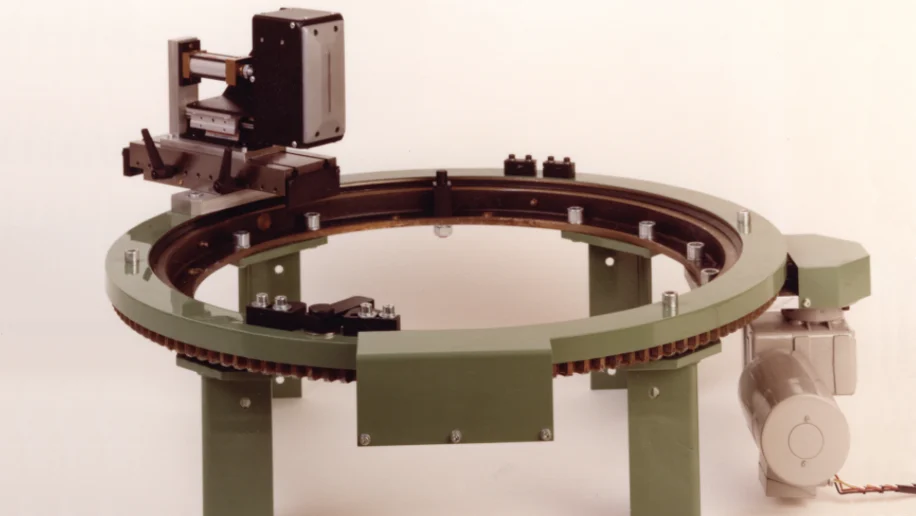
The first Thickness Profile Measurement System, based on a capacitive thickness sensor and measuring electronics from the US company Winzen Research Inc., had been exhibited at the K Show 1979 and one year later installed on a few blown film lines for continuous quality control.
1980 | FE-5 Width Control
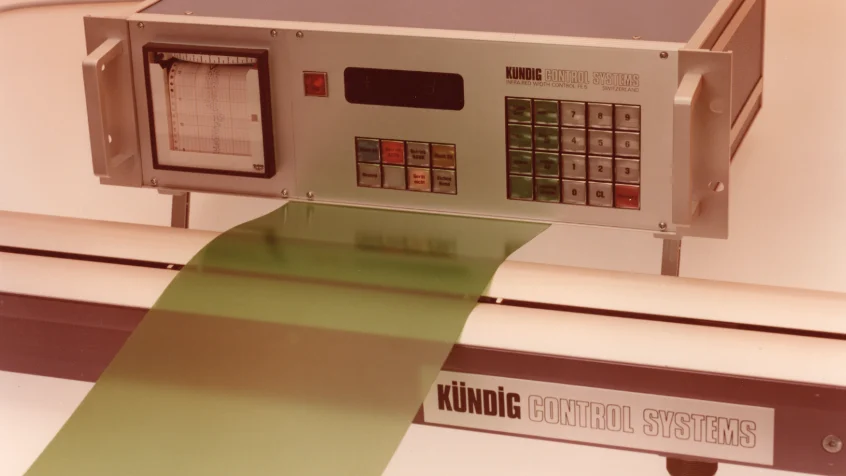
The FE-5 Width Control System was the first gauge from KCS using a microprocessor - the INS8900, a NMOS processor from National Semiconductor. As an option, the FE-5 Control Unit could be purchased with a chart recorder to log width deviations and was also available in a “SHRINK” version to communicate with two width measuring bars in order to measure gusseted films.
1981 | Offline Thickness Gauge for Quality Control
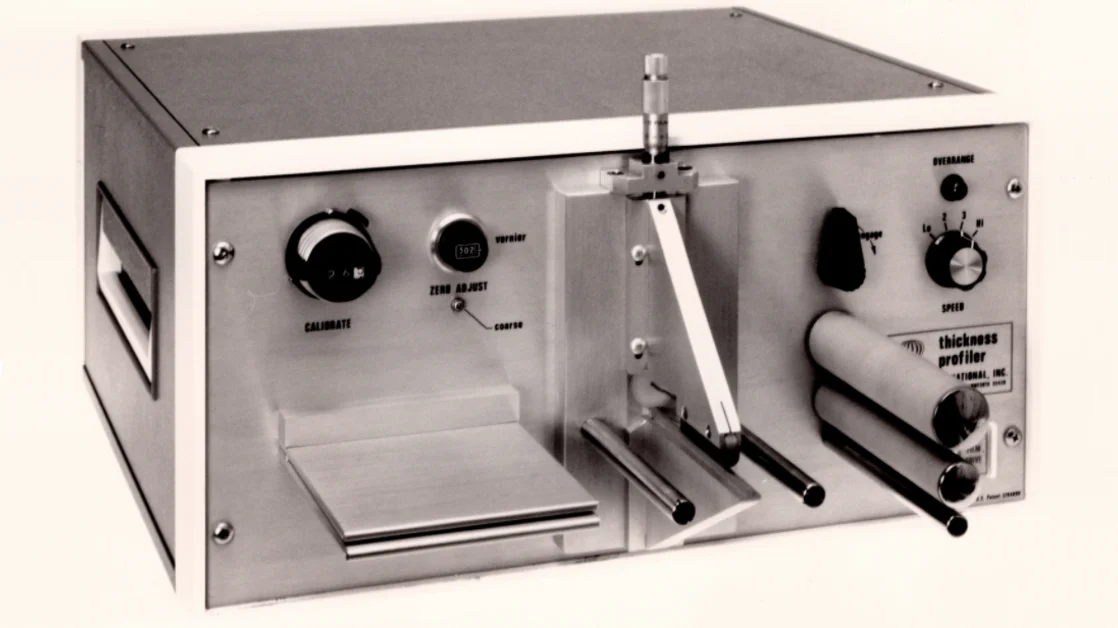
No, this is not a today’s competitor’s product, but rather an offline Thickness Gauge for quality control from Winzen Research Inc., which KCS distributed on the European market in the early 1980s.
1983 | KCS-400 Thickness Gauge
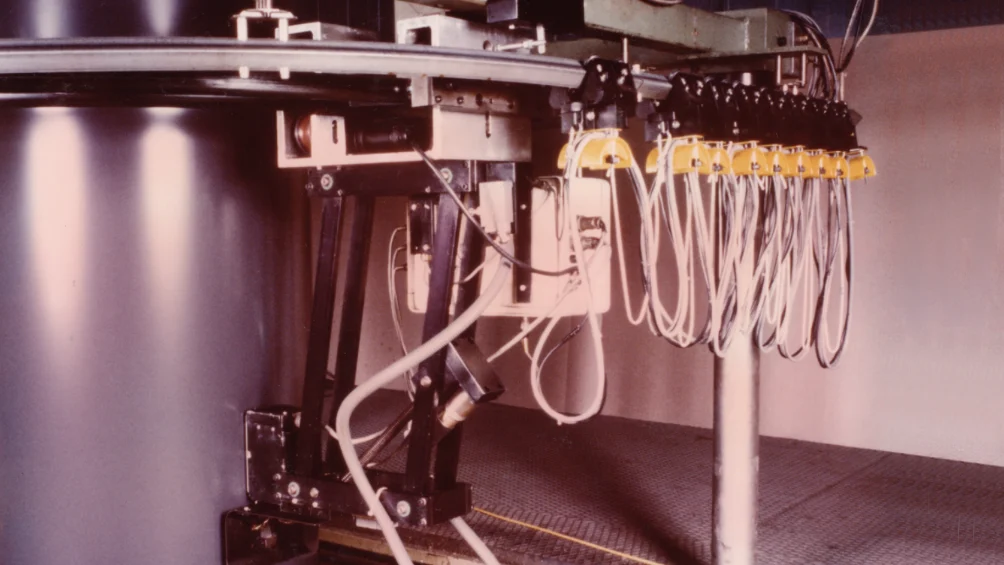
In 1982, development began on a new Thickness Profile Measurement System with automatic radial adjustment. The capacitive sensor continued to be sourced from Winzen Research Inc., but the measurement electronics for signal processing was developed in-house. At the 1983 K Show, KCS proudly presented the KCS-400 Thickness Gauge with automatic radial adjustment to its worldwide customer base.
1986 | FE-6 Width Control
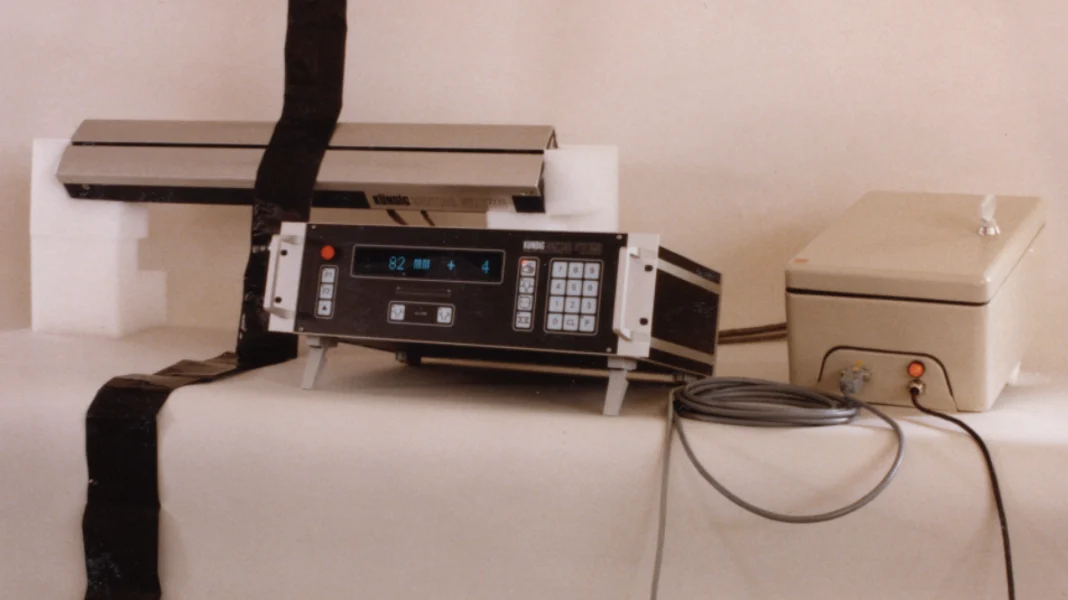
In 1985 KCS developed the FE-6 Width Control System consisting of a control unit, a measuring bar interface and a measuring bar. The membrane keyboard and the vacuum fluorescent display was one of the first applications in Switzerland using this latest technology at the time. The FE-6 Width Control System was unveiled to the global public at the 1986 K Show. It was showcased not only at the KCS booth but also on 10 blown film lines from various machine manufacturers.
1988 | K-100 Thickness Gauge
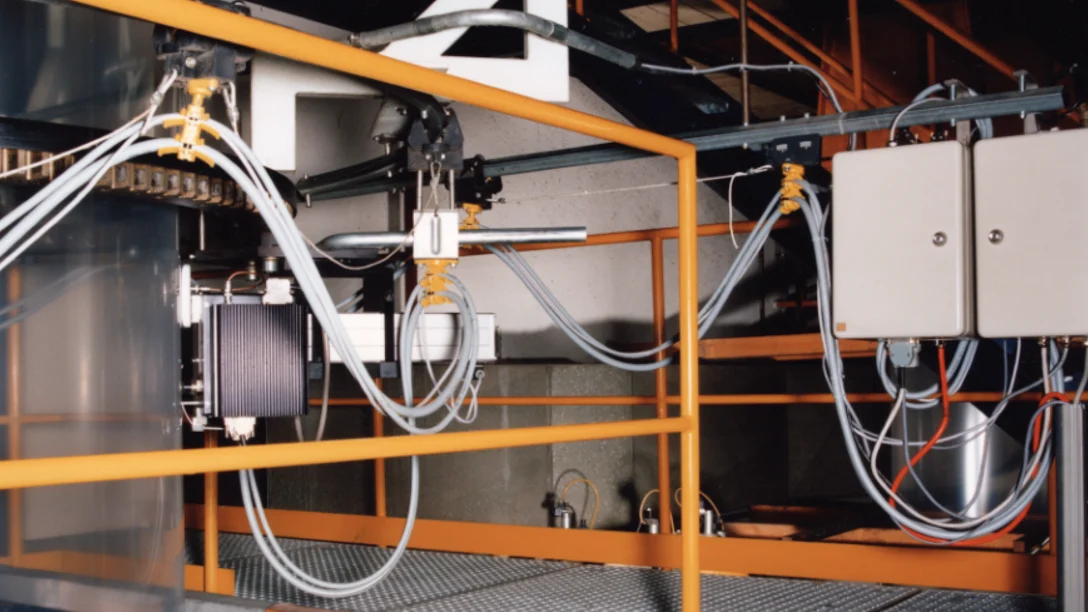
The development of our own Thickness Sensor with a compact measurement electronics, which began in 1987, was launched on the global market in 1988 as the K-100 Thickness Gauge. Remarkably, the design of the measuring head developed at that time served as a model for many of our competitors.
1990 | Filmtest — Film Quality Measuring Bench
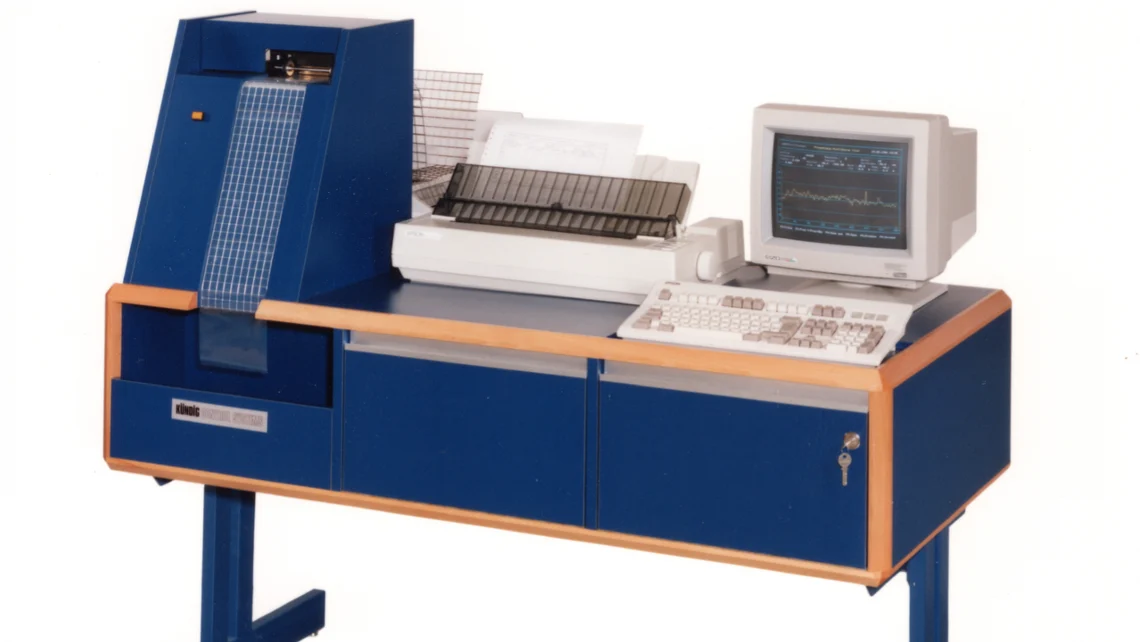
The Filmtest measures the relative thickness profile of individual film samples using a capacitive sensor and calibrates the thickness measurements fully automatically based on high-precision weight measurements and additional data. The software, written in Borland Pascal, enabled data archiving in a Paradox database and the printing of quality reports.
1996 | FE-7 Width Control
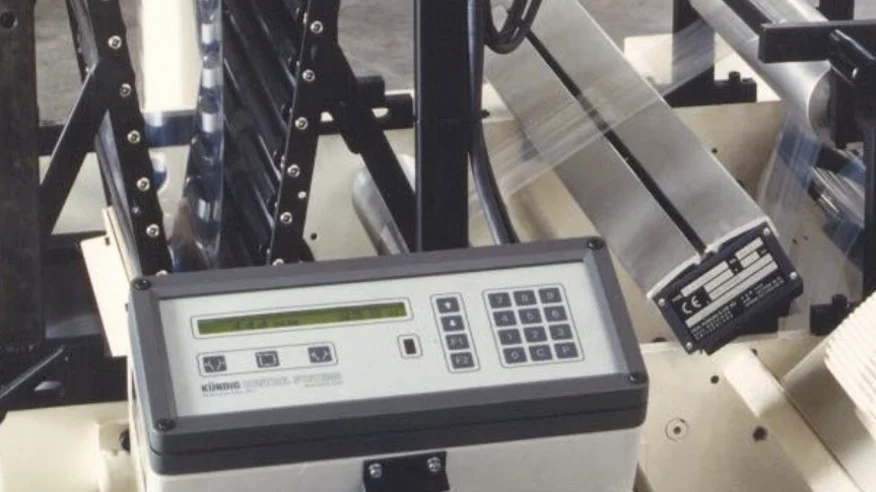
In 1995, a new development project was launched to replace the outdated hardware and software of the FE-6 Control Unit and Measuring Bar Interface. The width deviation trend can be visualized on the matrix display for quality monitoring. It was also possible for the first time to configure the display language, the width control mode, and other settings via the setup menu. At Equiplast 1996 in Barcelona, the FE-7 Width Control System was presented on two operating blown film lines.
2000 | “Big Line” Thickness Gauge
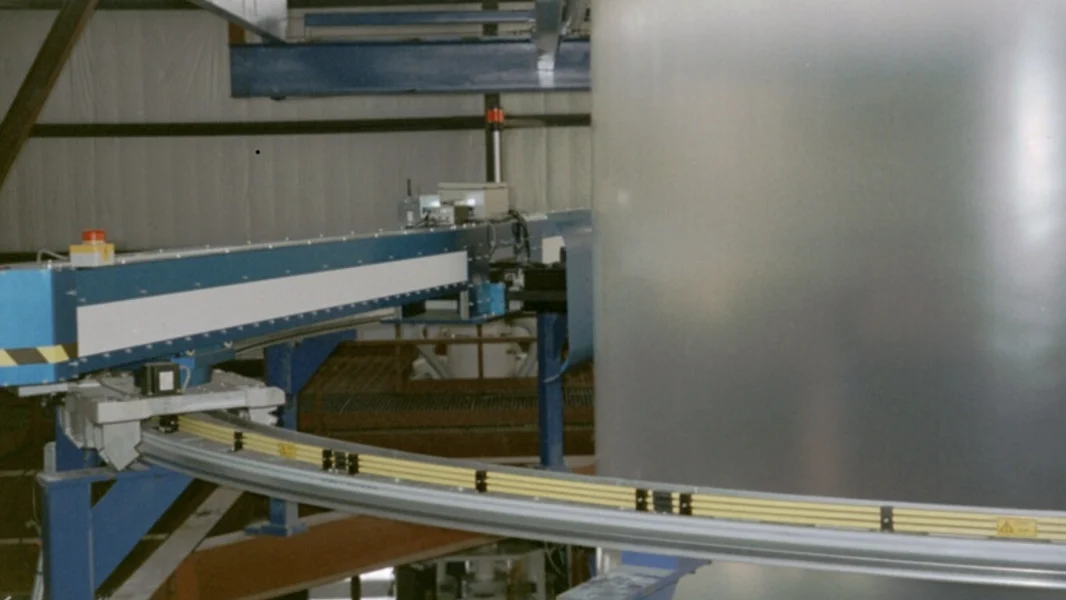
In 1999, KCS received a request for an online Thickness Profile Measurement and a Width Gauge for a maximum bubble diameter of 5450 mm [214.6 “] and a flat width of 9000 mm [354.3 “]. Since smaller dimensions were also produced using an additional die head (min. diameter of 1500 mm [59.1 “] and min. layflat width of 2300 mm [90.6 “]), a telescopic arm could not be used for the radial adjustment for stability reasons. In March 2000, this “Big Line—based on a tangential traverse—was installed at a dizzying height by the current Sales Manager and designer of this website, Christian Christ.
2002 | KNC-200 Thickness Gauge
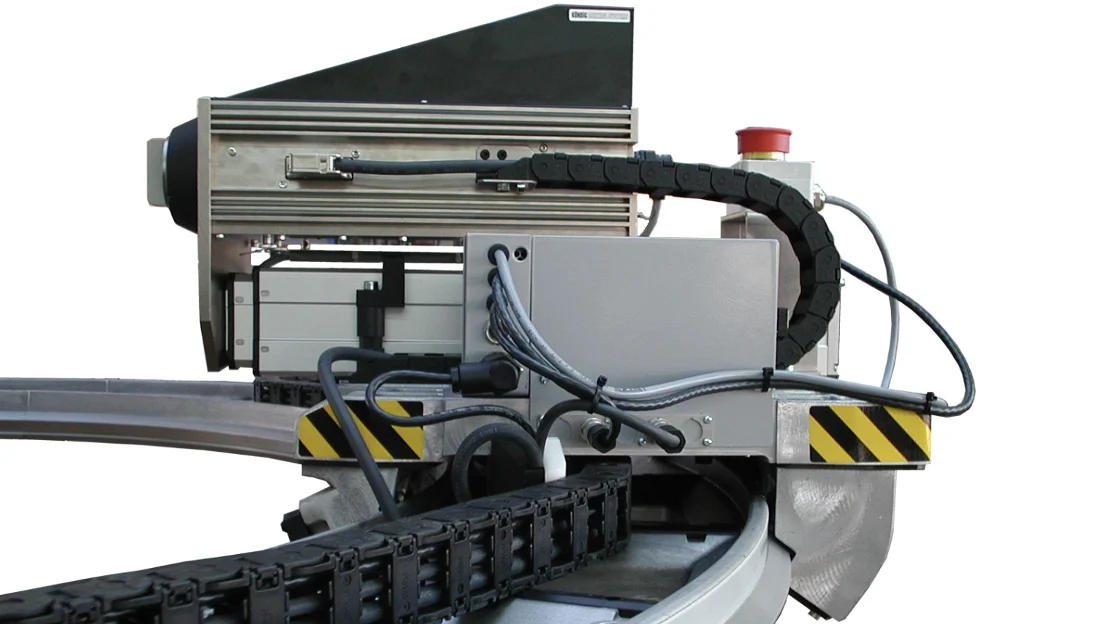
In 1995, a blown film line manufacturer presented a non-contact Thickness Profile Measurement System at the K trade show. The system was based on a third party-developed thickness sensor mounted on the then-current generation of KCS’s NGR-type reversing unit. This development triggered KCS to begin developing its own non-contact (or at least extremely low contact) thickness sensor. The development process took seven years before the first production-ready Thickness Measurement System was installed.
2004 | S-100 Thickness Gauge
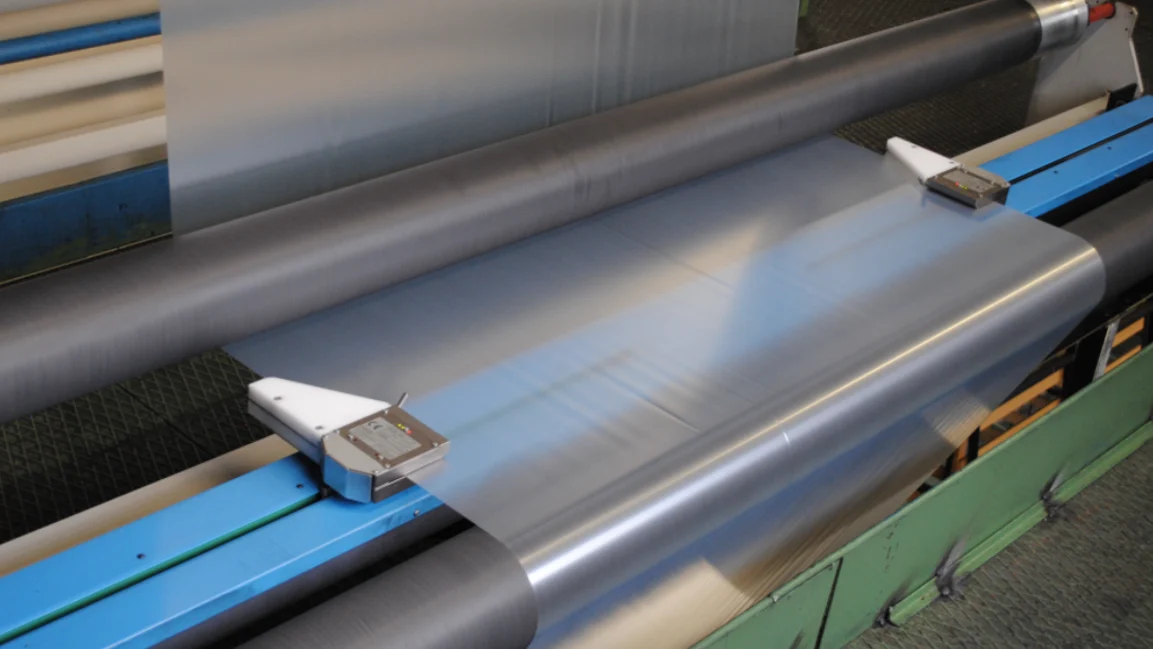
In the late 1990s, composite films with high proportions of PA and/or EVOH were produced more frequently. It became apparent that if the layer distribution was not perfect around the entire circumference of the die, capacitive profile thickness measurement would yield incorrect readings due to the varying—and in some cases temperature-dependent—dielectric constants. This circumstance led to the development of the S-100 Thickness Profile Measurement System, which remains a preferred instrument for non-nuclear thickness measurement of barrier films to this day.
2009 | KNC-400 Thickness Gauge
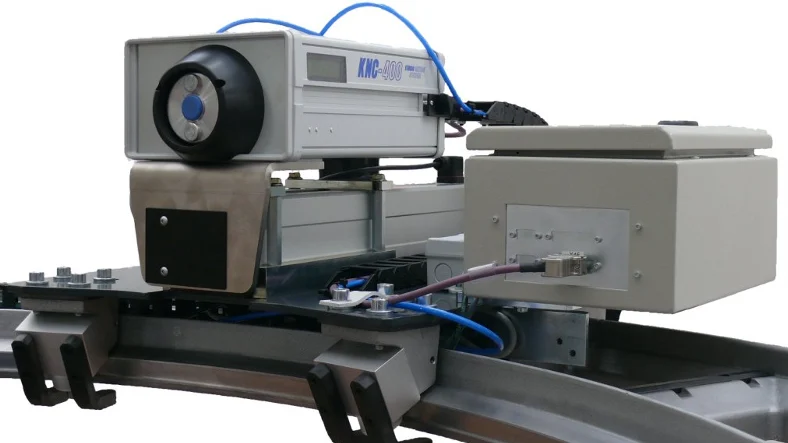
In 2009, the first KNC-400 non-contact Thickness Profile Measurement Systems were installed on various production lines. The capacitive measuring head is mounted on the axis of a linear motor and, supported by an air cushion, tracks the agile film bubble at a distance of just a few tenths of a millimeter. To ensure that the supporting air leaves as few marks as possible, it is temperature-controlled. To date, KCS has maintained a unique selling point worldwide with the KNC-400 and its successor model, the KNC-401, which was introduced in 2025.
2010 | K-300 Rotomat KT Thickness Gauge
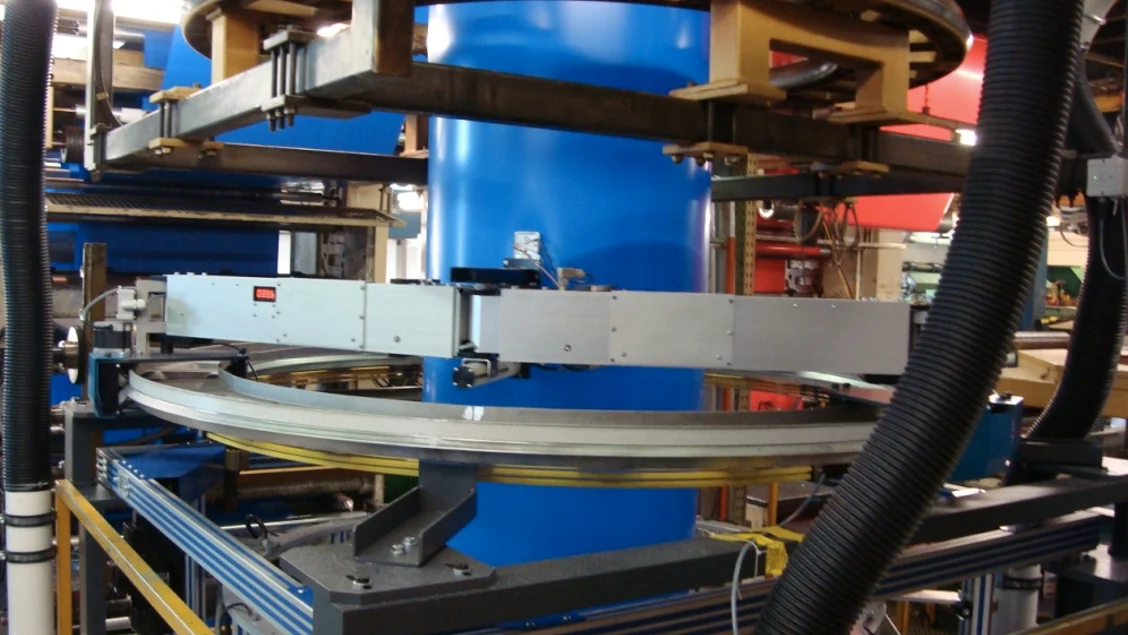
To reduce the number of model sizes, KCS began developing a new type of rotary scanner with radial adjustment based on an articulated-arm traverse in 2008. When it was launched in 2010, the Rotomat KT was initially offered exclusively with the K-300 sensor, the successor to the K-100 sensor. Currently, the 3rd generation Rotomat KT serves as a rotary scanner or reversing device for all of our current sensor types that measure at the cylindrical bubble.
Today | The Legacy Goes On...
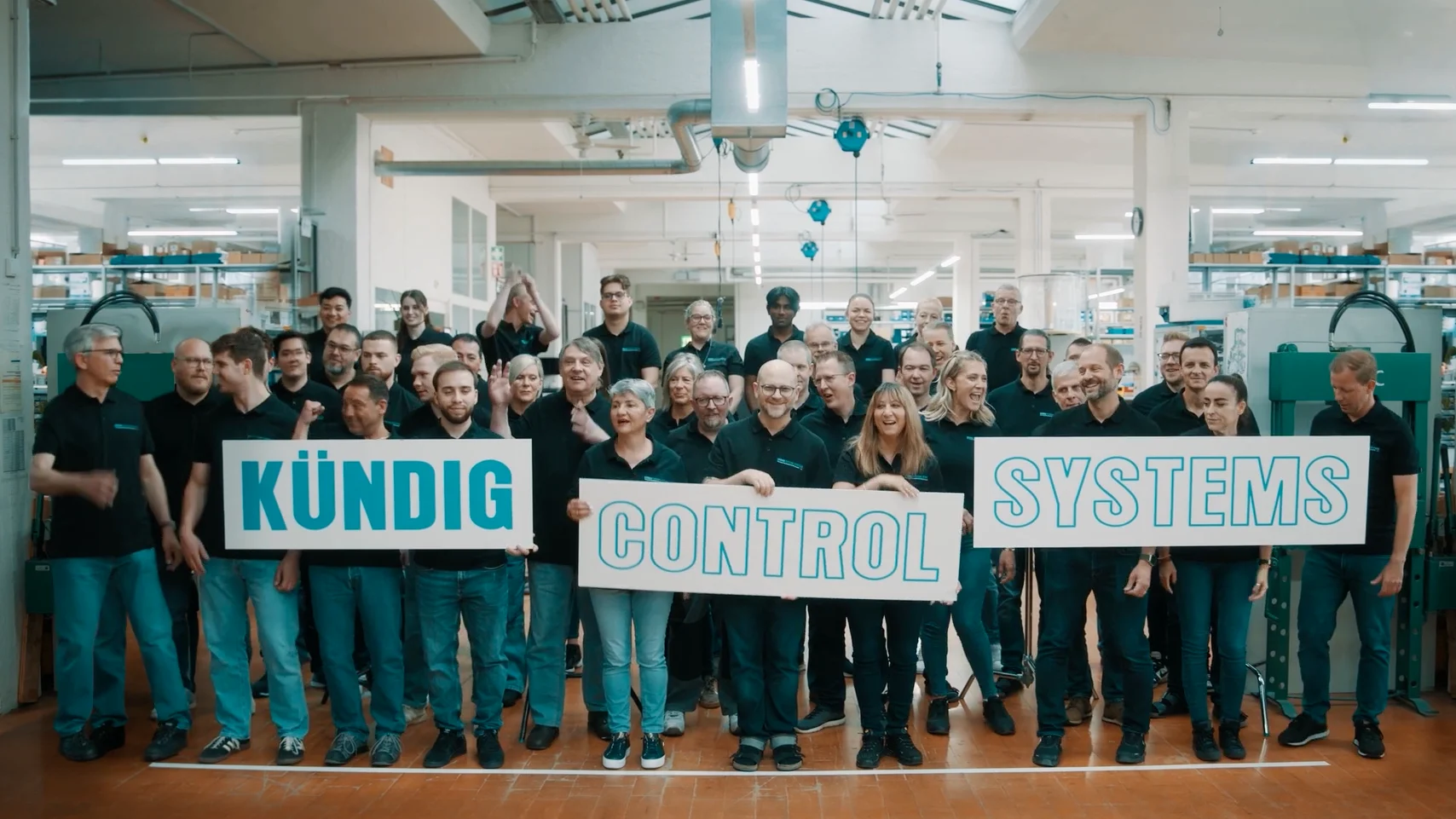
We are committed to building on our successful past and do our very best every day to bring new products and services to market that enable the most precise, high-quality, and resource-efficient film extrusion, thereby continuing to write the KCS success story.